Entry · Ref PEAEX9NJ
How to Build Durable Concrete Slabs That Last for Decades
- Posted
- 2026-10-08
- Last amended
- 2026-10-08
- Account
- @durableconcreteslabsscope
Why Some Concrete Slabs Fail and Others Hold Up
I have spent the better part of twenty years placing concrete in Norfolk County, Ontario, and I have seen slabs that look perfect for a season and then crack into a mess by the next spring. I have also seen slabs that were poured twenty years ago and still bear the same smooth surface, the same sharp edges, with only a few hairline cracks that never grew. The difference is not luck. It is the difference between a slab built with shortcuts and a slab built with the right materials, the right mix, and the right process from the ground up.
When a homeowner calls me for a free estimate, they usually want to know one thing: how long will this last? That depends on the choices we make together. The ground under the slab, the concrete mix itself, the reinforcement, the way we handle the pour, and the care we give it afterward. All of it matters. A truly durable concrete slab starts with understanding what the slab will go through.
So let me walk through what I have learned, not from a textbook but from years of mixing, pouring, finishing, and occasionally tearing out work that did not hold up. This is what separates a slab that becomes a permanent part of the property from one that becomes a headache.
The Ground Beneath the Slab
You cannot build durable concrete slabs on unstable ground. The soil in Norfolk County varies a lot. You get sandy loam near the lake, heavy clay further inland, and spots of organic soil where old wetlands used to be. Each one behaves differently when it freezes and thaws. If you pour a slab on soil that holds water, that soil will expand when it freezes and push the slab upward. That is frost heave. It cracks slabs, tilts patios, and breaks foundations.
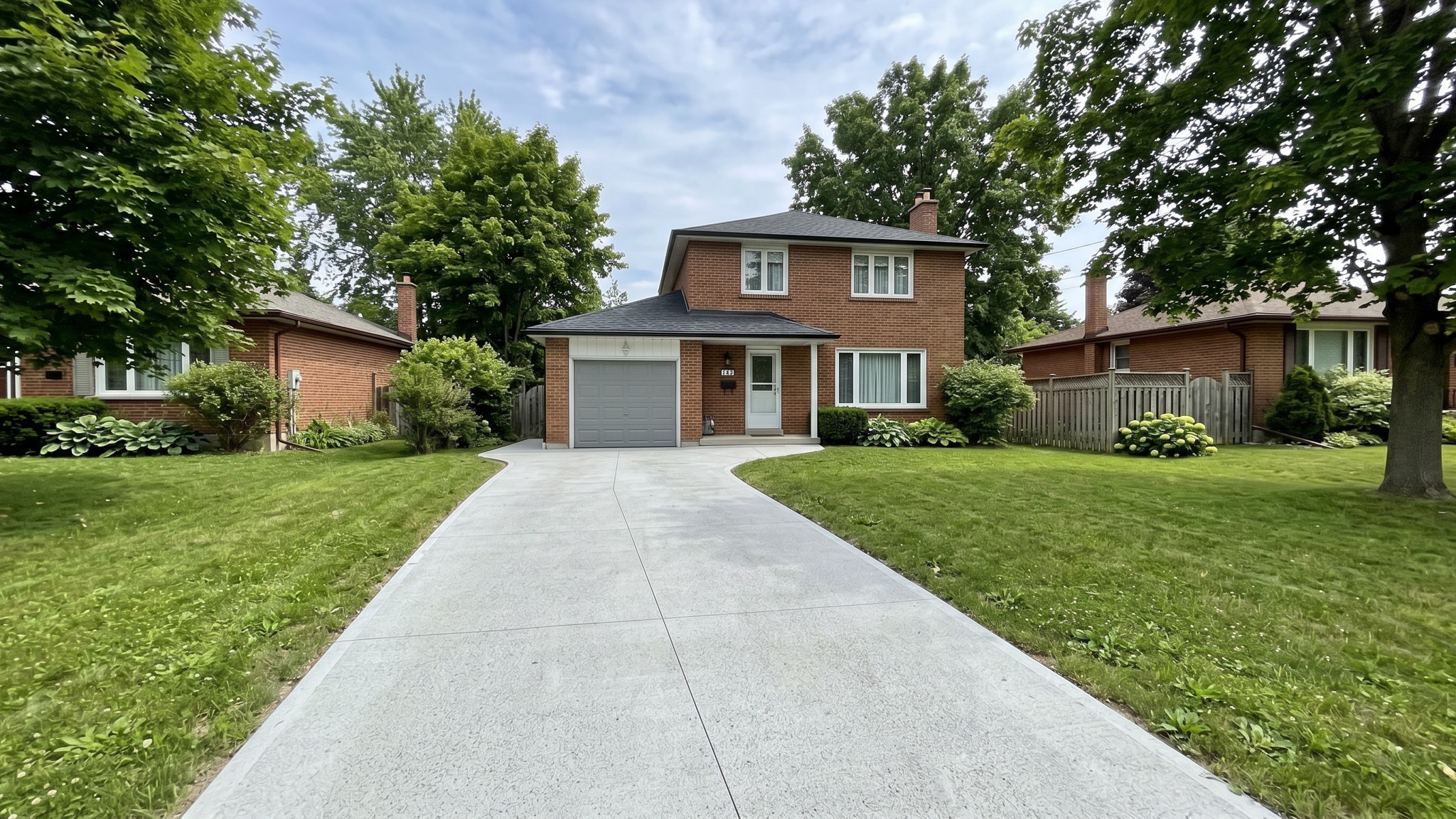
Before any concrete touches the ground, I dig down to a depth that gets below the frost line. In Ontario that means at least four feet for a footing, sometimes more. For a patio or a driveway you do not need a footing that deep, but you do need a proper base. I excavate at least eight inches, sometimes twelve, and fill that with compacted gravel. That gravel drains water away from the slab and gives the concrete a stable bed that does not shift when the ground freezes. I have seen too many slab failures that came from someone skipping this step. They save a day of digging and pay for it with a cracked slab the next winter.
Choosing the Right Mix
Once the base is right, the concrete itself has to be designed for the climate. In Ontario we get freeze-thaw cycles that can reach fifty or sixty cycles in a single winter. That is brutal for concrete. Water gets into microscopic pores, freezes, expands, and over time the surface starts to flake off. That is called scaling, and it is the most common failure I see on residential slabs.
The fix is air-entrained concrete. That means the mix contains tiny air bubbles, deliberately introduced with an admixture during batching. Those bubbles give the water somewhere to go when it freezes. Instead of expanding against the solid paste, the ice pushes into those air voids. The slab stays intact. Every exterior slab I pour uses air-entrained concrete. It costs a little more per yard, but it saves the slab from scaling within a few years.
I also watch the water content carefully. Too much water in the mix weakens the concrete and increases shrinkage cracking. A good ready-mix plant will deliver concrete with a water-to-cement ratio around 0.45 to 0.50. That is the ratio of water to Portland cement, the binder that makes concrete hard. Less water means stronger concrete, but the mix has to stay workable enough to place and finish. That balance is something a good concrete pump operator understands. When we use a concrete pump to place the slab, the mix has to be fluid enough to move through the hose but not so wet that it loses strength.
Reinforcement: Steel and Fibers
A plain concrete slab will crack. Concrete is strong in compression but weak in tension. When the ground shifts or the slab shrinks as it cures, tension builds and cracks appear. Reinforcement holds those cracks tight so the slab stays functional and looks decent.
For most residential slabs I use rebar. That is steel with ridges that grip the concrete. I place it in a grid, usually spaced 18 inches apart, and tie it with wire. The rebar sits in the middle of the slab thickness, supported on plastic chairs so it does not sink to the bottom during the pour. If the rebar sits at the bottom, it does nothing to control cracking. I have cut out slabs where the wire mesh was lying on the dirt because nobody lifted it. That is a wasted effort.
Sometimes I use wire mesh for lighter slabs like walkways, but for driveways and patios that will carry vehicles or heavy furniture, rebar is better. I also add synthetic microfibers to the mix. Those fibers reduce plastic shrinkage cracks that can form in the first few hours after pouring, before the concrete has hardened enough to resist them.
Pouring and Finishing
The pour itself is a race against time. Once the concrete is mixed, you have about 90 minutes before it starts to set. The crew has to get it placed, leveled, and finished before that window closes. That is why I plan the pour carefully. I make sure the concrete pump can reach every corner of the slab so we do not have to wheelbarrow concrete across fresh work. A cold joint happens when one batch of concrete hardens before the next batch is placed against it. That creates a weak seam that will crack later. A good pour avoids cold joints by working continuously from one end to the other.
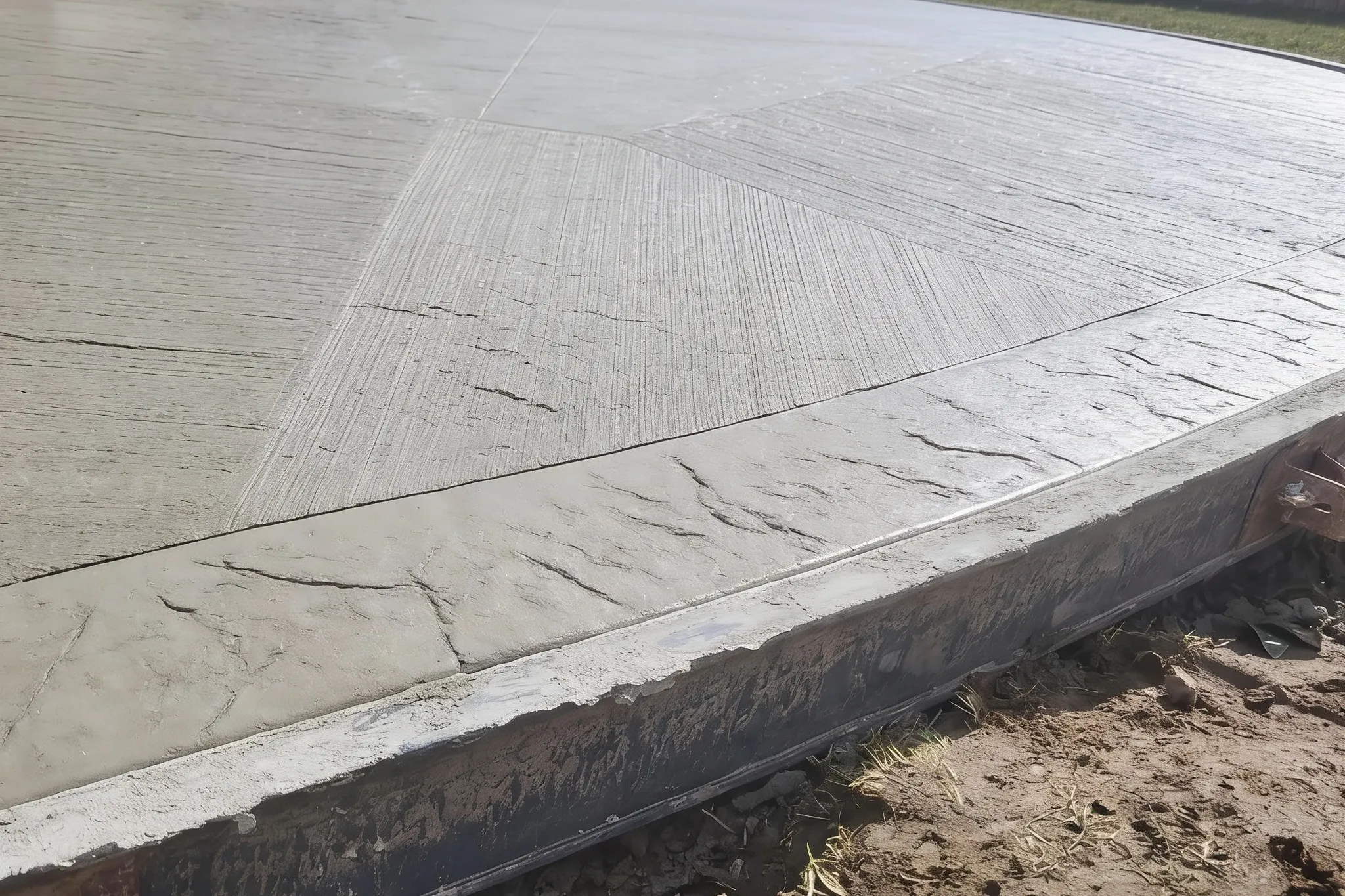
After the concrete is screeded level, we let the surface water evaporate until the concrete can support a finishing trowel. That is where experience matters. Too early and the surface gets a crust that peels later. Too late and the concrete is too stiff to finish smoothly. We use a concrete saw to cut control joints the next day. Those joints are scored lines that encourage the slab to crack in a straight line under the joint, where it is less visible. I cut them about a quarter of the slab depth, spaced at intervals roughly equal to the slab thickness in inches. For a four-inch slab, joints every eight to ten feet.
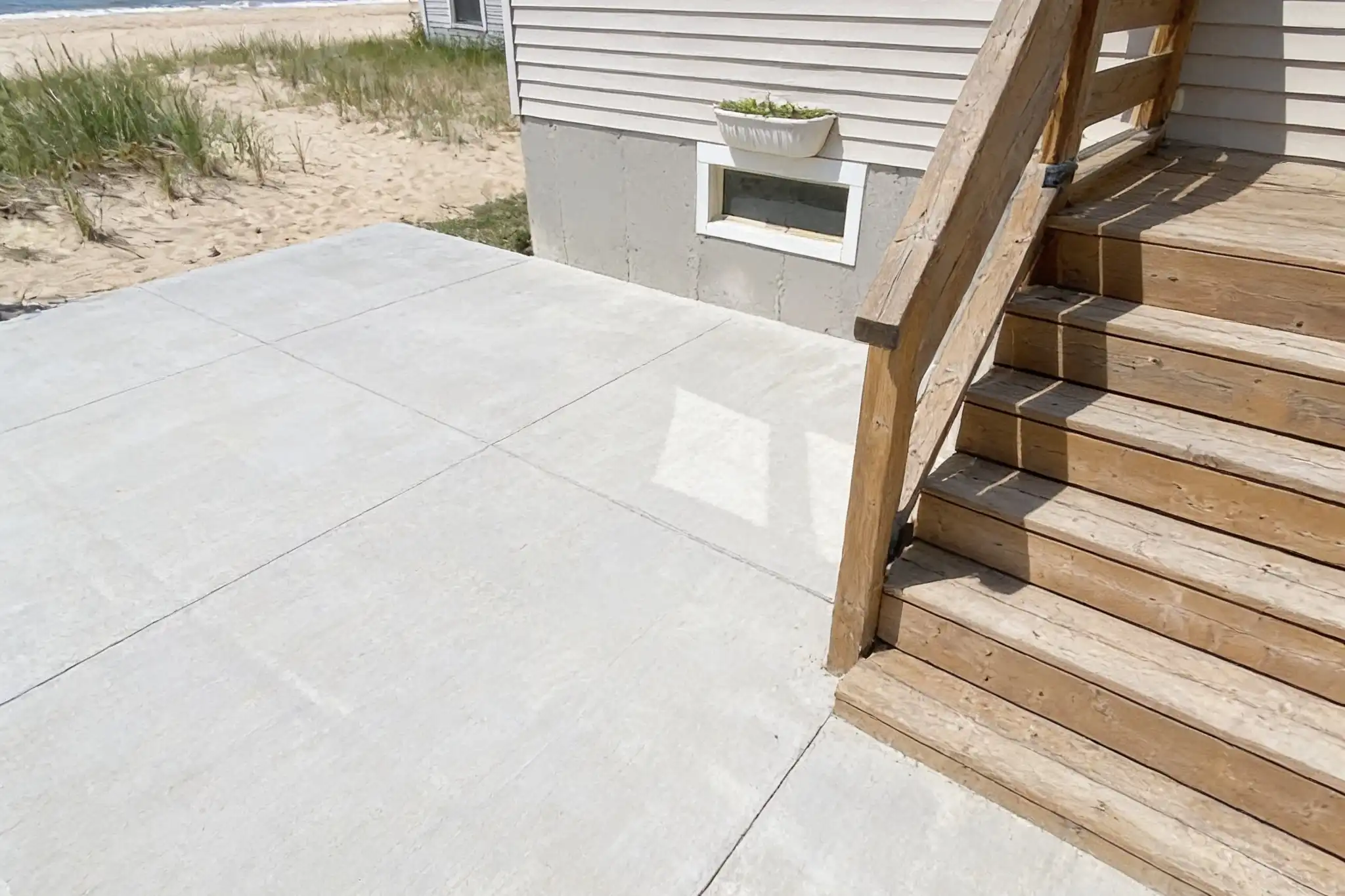
I also install expansion joints where the slab meets a house foundation, a garage floor, or another rigid object. Those joints are filled with a flexible material that lets the slab expand and contract with temperature changes without pushing against the house. Without them, the slab will push and crack or push the wall. I have seen foundations damaged by slabs that had no expansion joint.
Curing: The Step Most People Skip
Concrete does not just harden by drying. It hardens by hydration, a chemical reaction between Portland cement and water. That reaction continues for weeks and even months. If the water evaporates too fast, the reaction stops and the concrete never reaches its full strength. That is why curing matters.
For a slab, I apply a curing compound right after finishing. That is a liquid that forms a film on the surface and traps moisture inside. Sometimes I use wet burlap and plastic sheeting instead. The goal is the same: keep the concrete moist for at least seven days. In hot weather or windy conditions, the surface can dry out in hours. A slab that is not cured properly will be weaker, more porous, and more likely to scale and crack.
I have seen contractors skip this step to save a day. They pour the slab, finish it, and walk away. The slab looks fine for a month. Then the first winter hits and the surface starts to flake. The owner calls them back and they blame the weather. But the real cause was skipped curing. A little patience during curing pays off for the life of the slab.
Special Cases: Patios and Foundations
For a patio, I often use interlocking base materials instead of a full concrete slab. That is a different system entirely. But when a customer wants a concrete patio, I treat it like a slab. The same rules apply: good base, air-entrained concrete, rebar, control joints, proper curing. I have poured patios that look like stone with scored joinery, where the lines mimic large pavers. That gives the look of patio pavers without the joints that collect weeds and shift over time. It works well, but only if the slab is built to last.
For foundations, the stakes are higher. A foundation slab has to support the whole house. That means thicker concrete, more reinforcement, and deeper footings. I use sonotube forms for column footings and pour them in one continuous operation. The concrete mix for a foundation often includes a higher proportion of Portland cement and sometimes hydraulic cement for a rapid set in wet conditions. The engineering matters more here, and I always follow the structural plans exactly.
Recycling and Reclaimed Aggregate
In recent years I have used reclaimed aggregate in some slabs. That is crushed concrete from demolition jobs, mixed with virgin stone. It works well for base layers and for slabs that do not need a smooth finish, like a shop floor or a temporary pad. It reduces waste and lowers the cost. But for a finished patio or a driveway where appearance matters, I stick with clean virgin aggregate. The reclaimed pieces can vary in size and color, and they can cause issues with the finish if they appear at the surface.
The Value of a Service Warranty
When I give a free estimate, I also explain what the service warranty covers. A good warranty gives the homeowner confidence. It covers defects in materials and workmanship, like excessive cracking or scaling, for a set period. It does not cover damage from tree roots, ground settlement, or heavy loads beyond what the slab was designed for. That is fair. The contractor controls the concrete, not the ground under it. But a warranty tells the customer that the contractor stands behind the work. That is worth something.
I have seen too many slabs that were poured cheap, with no warranty, and cracked within a year. The homeowner pays twice: first for the slab, then for the repair. A little extra upfront investment in materials and process saves that headache. Durable concrete slabs are not an accident. They are the result of good choices made before the truck arrives. The ground, the mix, the reinforcement, the pour, the finishing, the curing. Every step matters. When you get them right, the slab becomes a permanent part of the property. It holds up through winters, carries cars and furniture, and looks good for decades. That is the goal.